
When walking with a stroller, stay vigilant and be aware of traffic calming features like speed bumps and narrow lanes that help slow vehicles. Maximize visibility by positioning the stroller well, using reflective gear, and making eye contact with drivers before crossing streets. Keep a firm grip on the stroller, watch for obstacles, and always use crosswalks with pedestrian signals. Focusing on these safety tips ensures a confident, secure stroll—exploring these strategies further can boost your peace of mind.
Key Takeaways
- Stay alert to traffic calming features like speed bumps and narrowed lanes to navigate streets safely with a stroller.
- Maximize stroller visibility with reflective gear and proper positioning, especially in low-light conditions.
- Maintain a firm grip on the stroller and scan both ways before crossing intersections or driveways.
- Use crosswalks, pedestrian signals, and curb steps to improve visibility and ensure safe street crossings.
- Adjust walking pace according to environmental conditions and stay vigilant to prevent accidents and ensure safety.
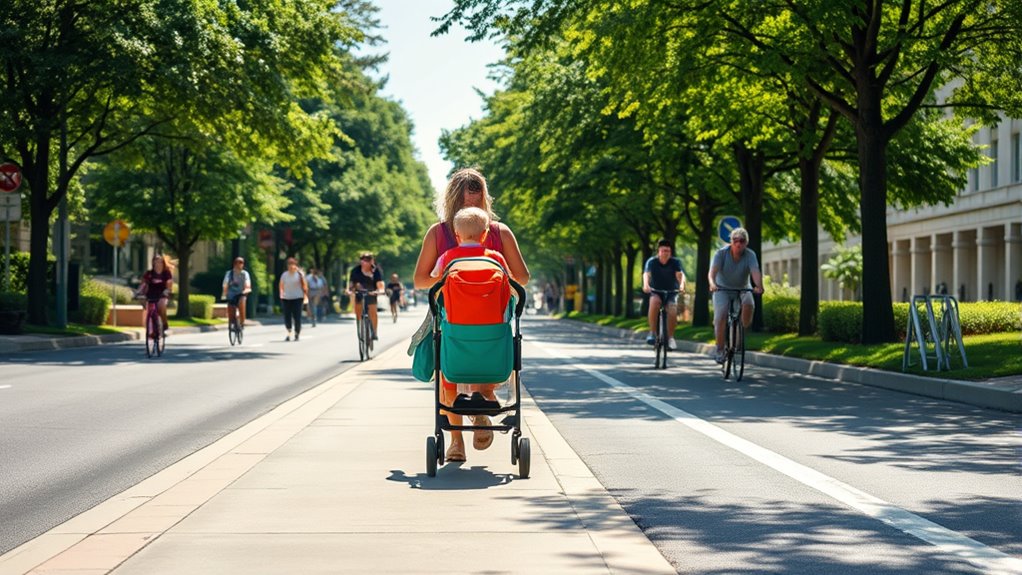
Walking with a stroller requires constant awareness of your surroundings to guarantee safety for both your child and yourself. Streets and sidewalks can be unpredictable, so it’s essential to stay alert and proactive. One way to do this is by paying attention to traffic calming measures in your area. These features, such as speed bumps, chicanes, and narrowed lanes, serve to slow down vehicles, making streets safer for pedestrians and stroller users alike. When you recognize these measures, you can more confidently navigate busy roads, knowing that drivers are less likely to be speeding or distracted. Traffic calming isn’t just about slowing cars; it’s about creating a safer environment where you can maintain better control over your surroundings.
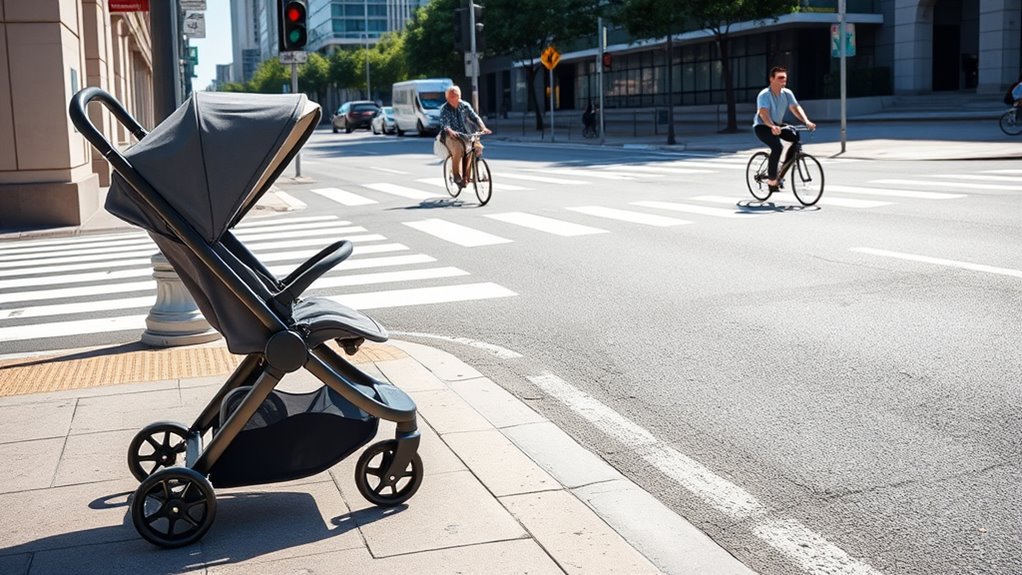
Visibility enhancement is equally important when walking with a stroller, especially in areas with high traffic or low lighting. Make sure your stroller is always positioned to maximize your ability to see and be seen. Use reflective gear on yourself and your stroller during early mornings, evenings, or cloudy days to increase your visibility to drivers. When crossing streets, ensure you have an unobstructed view of oncoming traffic and that drivers can see you clearly. If necessary, step onto the curb to get a better vantage point before crossing, and use crosswalks whenever available. Remember, never assume that a driver will stop; instead, make eye contact with approaching vehicles and wait for them to yield before crossing.
Stay vigilant on sidewalks as well. Look out for obstacles like uneven pavement, debris, or parked cars that might suddenly pull out into your path. Keeping a firm grip on the stroller’s handle helps you maintain control and react swiftly if needed. When approaching intersections or driveways, slow down and scan both ways thoroughly. Even if you have the right of way, drivers may not always see you or might be distracted. Using pedestrian signals and waiting for the walk sign ensures that you’re crossing safely.
Incorporating traffic calming features and visibility strategies into your routine isn’t just about following rules; it’s about actively making your journey safer. By paying attention to your environment and adjusting your pace accordingly, you reduce the risk of accidents and help set a good example for your child. Staying alert, aware of traffic calming measures, and enhancing your visibility will help you navigate streets and sidewalks confidently, ensuring both your safety and your child’s comfort every step of the way. Additionally, considering the available security systems can provide extra peace of mind during your walks, especially in unfamiliar or less safe areas.
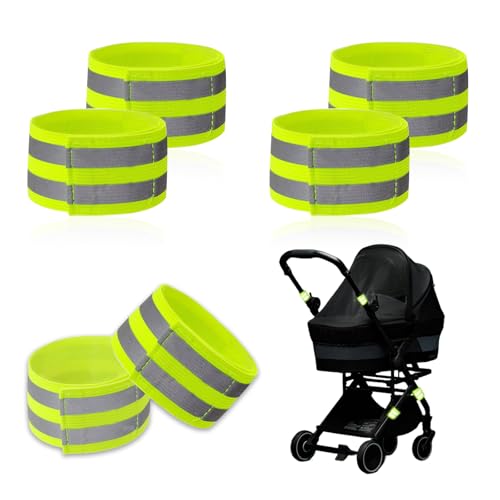
6-Pack of Reflective Bands for Strollers, High Visibility Elastic Reflectors with Velcro Fastening for Walking at Night, Durable Baby Stroller Lights and Reflective Gear for Kids
High Visibility: Stroller reflectors with elastic band and velcro fastening provide exceptional visibility for strollers at night.
As an affiliate, we earn on qualifying purchases.
As an affiliate, we earn on qualifying purchases.
Frequently Asked Questions
What Are the Best Stroller Types for Urban Sidewalks?
You should choose a lightweight stroller with good maneuverability for urban sidewalks. Opt for one that’s easy to steer and compact enough to navigate crowded streets. Check its weight to make certain it’s manageable for you, and consider storage capacity for your essentials. A foldable design helps with storage and transport. These features make your outings smoother and safer, giving you confidence while handling busy city sidewalks with your stroller.
How Can I Teach My Toddler Road Safety Habits?
To teach your toddler road safety habits, always supervise them closely, making safety education fun and memorable. Use simple rules like looking both ways, holding hands near roads, and crossing only at crosswalks. Reinforce these lessons regularly, praise good behavior, and set a good example yourself. Consistent child supervision and clear safety education build their confidence and awareness, helping them become safer pedestrians as they grow.
Are There Specific Safety Accessories for Stroller Visibility?
Yes, you can enhance your stroller’s visibility with safety accessories like reflective strips and visibility vests. Attach reflective strips to the stroller’s frame for added visibility during low-light conditions. You can also have your toddler wear a bright or reflective vest, making them more noticeable to drivers. These accessories are simple, affordable, and effective ways to keep your little one safer while out and about, especially in dim or busy environments.
How Do Weather Conditions Affect Stroller Safety?
Weather hazards are like unpredictable storms in the sky, threatening your stroller security. Rain, snow, or strong winds can make surfaces slippery or obscure visibility, so you need to guarantee your vigilance. Adjust your pace, use weather-appropriate covers, and secure your stroller firmly to navigate these conditions safely. By staying alert and prepared, you help assure your little one’s safety amidst nature’s changing moods.
What Should I Do if a Cyclist Approaches Unexpectedly?
If a cyclist approaches unexpectedly, stay calm and follow proper sidewalk sharing and cyclist etiquette. Gently steer your stroller to the side, giving the cyclist enough space to pass safely. Make eye contact if possible, and use hand signals if needed to communicate your intentions. Keep your child close and watch the cyclist’s movements. Being aware and courteous helps prevent accidents and promotes safe sidewalk sharing for everyone.
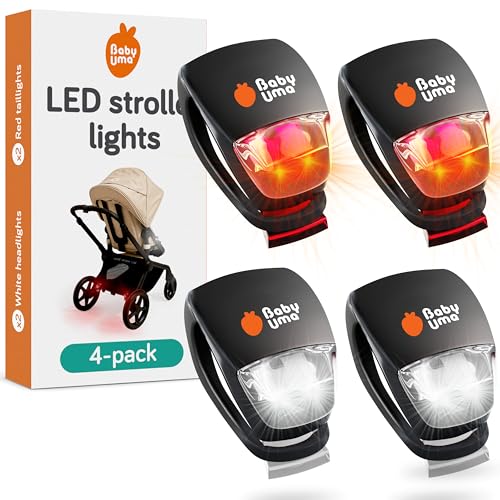
Baby Uma LED Stroller Lights (4-Pack) – Universal with 3 Light Modes (Constant/Pulse/Strobe), Buggy & Bike Lights Front and Back (2 White Headlights & 2 Red Taillights), Clip-On Bike Light
Lights on, worries off: Stay visible on the stroll with Baby Uma's 4-Pack of LED Stroller Lights! With…
As an affiliate, we earn on qualifying purchases.
As an affiliate, we earn on qualifying purchases.
Conclusion
Remember, safety is a shared responsibility. By staying alert, following traffic rules, and choosing the right paths, you guarantee your child’s protection and your peace of mind. Always keep a close eye on your stroller, especially near busy roads and sidewalks. As the saying goes, “Safety first.” When you prioritize caution and awareness, both you and your little one can enjoy your outings confidently and securely.

SeedFuture Stroller Handle Cover Black Compatible for Babyzen Yoyo Yoga, PU Leather Pram Handle Protector Stroller Accessories, Pushchair Armrest Handle Protector Cover
Size: 20×4.5 inches (53×11.5cm), suitable for the perimeter of 4.5 inches (11.5cm) stroller handle, used for strollers with…
As an affiliate, we earn on qualifying purchases.
As an affiliate, we earn on qualifying purchases.
6-Pack of Reflective Bands for Strollers, High Visibility Elastic Reflectors with Velcro Fastening for Walking at Night, Durable Baby Stroller Lights and Reflective Gear for Kids
High Visibility: Stroller reflectors with elastic band and velcro fastening provide exceptional visibility for strollers at night.
As an affiliate, we earn on qualifying purchases.
As an affiliate, we earn on qualifying purchases.