Understanding whether you’re experiencing spotting or bleeding can help you decide when to seek medical help. Spotting is light, irregular, and lasts only a day or two, while bleeding is heavier and more consistent. If you notice heavy bleeding, bleeding that lasts longer, or occurs unexpectedly—especially if it’s painful or associated with other symptoms—you should call your healthcare provider. Keep exploring to learn more about your symptoms and when to take action.
Key Takeaways
- Call a healthcare provider if bleeding is heavy, lasts more than a few days, or is irregular and unpredictable.
- Seek medical attention for spotting accompanied by pain, foul odor, dizziness, or severe cramps.
- Contact your doctor if spotting occurs after menopause or unexpectedly outside your normal cycle.
- Consult a professional if bleeding worsens with contraceptive changes or if you experience other concerning symptoms.
- Visit a healthcare provider promptly for persistent or unusual bleeding patterns to identify underlying health issues.
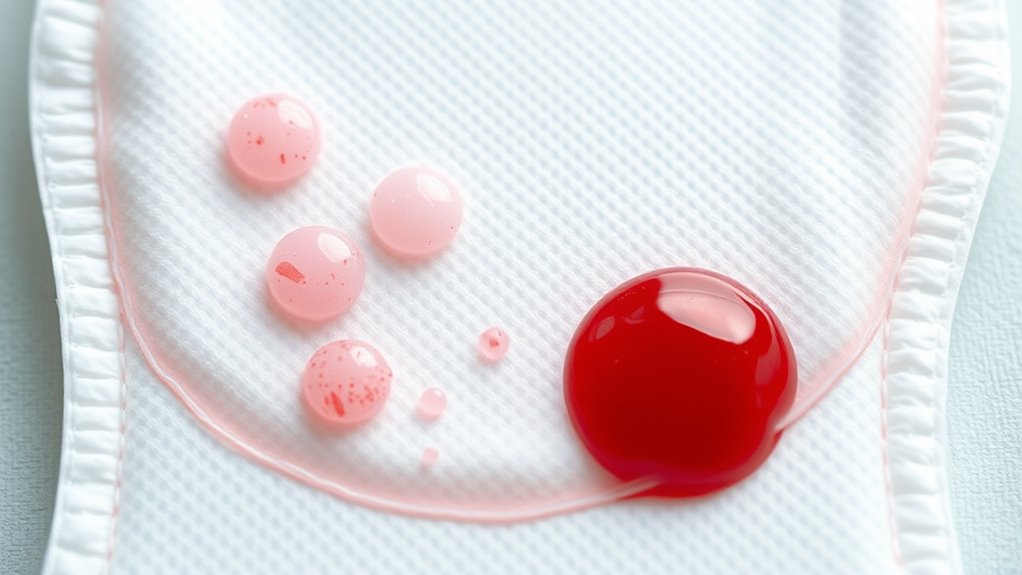
Understanding the difference between spotting and bleeding is important because both can indicate different health conditions or stages of your menstrual cycle. Spotting refers to light, often irregular bleeding that occurs outside your typical period. It might be just a few drops or light staining, and it usually lasts a day or two. Bleeding, on the other hand, tends to be heavier and more consistent, resembling your normal period flow. Recognizing these differences helps you determine whether you just need to monitor your body or seek medical advice. Hormonal fluctuations during different phases of your cycle—such as ovulation or menstruation—can cause these patterns, making awareness of your body’s signals essential. Your menstrual cycle is governed by hormonal changes that regularly prepare your body for potential pregnancy. During different phases, hormone levels fluctuate—estrogen and progesterone levels rise and fall—leading to various bleeding patterns. Spotting can happen at specific times in your cycle, like ovulation, when a surge in luteinizing hormone sometimes causes light bleeding. Similarly, hormonal imbalances, such as those caused by stress, weight fluctuations, or contraceptive use, can also trigger spotting. Often, this type of bleeding is harmless and part of your body’s natural rhythm, but understanding the hormonal context can help you distinguish between normal and abnormal spotting. However, not all spotting is benign. If you notice it occurs unexpectedly, is heavy, lasts longer than a few days, or is accompanied by other symptoms like pain or foul odor, it’s time to call your healthcare provider. Spotting after menopause is also a red flag, as it could indicate more serious issues such as hormonal imbalances, uterine polyps, or even cancer. Similarly, bleeding that is heavy, irregular, or occurs between periods should be evaluated promptly. Heavy bleeding can lead to anemia and might signal conditions like fibroids or hormonal disorders needing medical intervention. Paying attention to your body’s signals is crucial because changes in bleeding patterns can sometimes indicate underlying health concerns. It’s essential to pay attention to what your body is telling you. While some spotting and irregular bleeding are normal parts of hormonal shifts or menstrual cycle variations, persistent or unusual bleeding warrants professional assessment. Always consider the context: recent changes in medication, new contraceptive methods, or significant stress can influence hormonal levels and bleeding patterns. When in doubt, especially if bleeding is heavy, lasts more than a few days, or is accompanied by symptoms like dizziness or severe cramps, don’t hesitate to contact your healthcare provider. Prompt attention ensures you address potential issues early, maintaining your reproductive health and overall well-being.
women's menstrual cycle tracking app
As an affiliate, we earn on qualifying purchases.
As an affiliate, we earn on qualifying purchases.
Frequently Asked Questions
Can Spotting Be a Sign of Pregnancy Complications?
Yes, spotting can sometimes be a sign of pregnancy complications, but it’s often just implantation bleeding, an early pregnancy sign. If you notice light spotting, it’s usually normal, but if it’s heavy, lasts long, or comes with pain, you should call your healthcare provider. Keep track of your symptoms to help determine if it’s typical early pregnancy signs or something that needs medical attention.
How Do Hormonal Changes Affect Spotting Versus Bleeding?
Hormonal fluctuations markedly impact spotting and bleeding during your menstrual cycle. During ovulation, a spike in hormones can cause light spotting, while the drop in progesterone before your period may lead to heavier bleeding. These hormonal changes regulate your cycle, making spotting typically lighter and shorter. If you notice abnormal or persistent bleeding, it’s essential to consult your healthcare provider, as these changes can sometimes signal underlying issues.
Is Spotting Normal After Certain Contraceptive Methods?
Yes, spotting can be typical after starting certain contraceptives. Many contraceptive methods cause hormonal fluctuations, leading to minor side effects like light spotting or irregular bleeding, which are common menstrual irregularities. However, if the spotting persists beyond a few months, becomes heavy, or is accompanied by pain, you should consult your healthcare provider to rule out other issues and verify your contraceptive choice is appropriate.
Can Stress Cause Irregular Spotting or Bleeding?
Yes, stress can cause irregular spotting or bleeding. It disrupts hormonal balance, leading to menstrual myths about stress affecting your cycle. To manage irregular spotting, consider natural spotting remedies like maintaining a healthy diet, reducing stress, and staying hydrated. If spotting persists or worsens, it’s essential to consult a healthcare provider to rule out other issues. Don’t ignore ongoing symptoms; timely medical advice guarantees your health stays on track.
When Should I Seek Emergency Medical Help for Spotting?
You should seek emergency medical help if your spotting is heavy, lasts more than a few days, or is accompanied by severe pain, dizziness, or weakness. Also, if you experience bleeding after menopause or have symptoms like fever or foul odor, it could be a sign of a serious menstrual disorder affecting your reproductive health. Prompt attention guarantees your well-being and helps address potential underlying issues effectively.
light spotting pads
As an affiliate, we earn on qualifying purchases.
As an affiliate, we earn on qualifying purchases.
Conclusion
Understanding the difference between spotting and bleeding helps you recognize what’s normal and when to seek help. While spotting can be a gentle whisper of your body’s cycles, bleeding often shouts for attention. Both are signals, but their meanings vary. Pay close attention—sometimes a subtle change is more significant than it seems. Trust your instincts and don’t ignore your body’s messages; knowing when to call can make all the difference for your health.
menstrual bleeding monitor
As an affiliate, we earn on qualifying purchases.
As an affiliate, we earn on qualifying purchases.
hormonal imbalance supplements
As an affiliate, we earn on qualifying purchases.
As an affiliate, we earn on qualifying purchases.