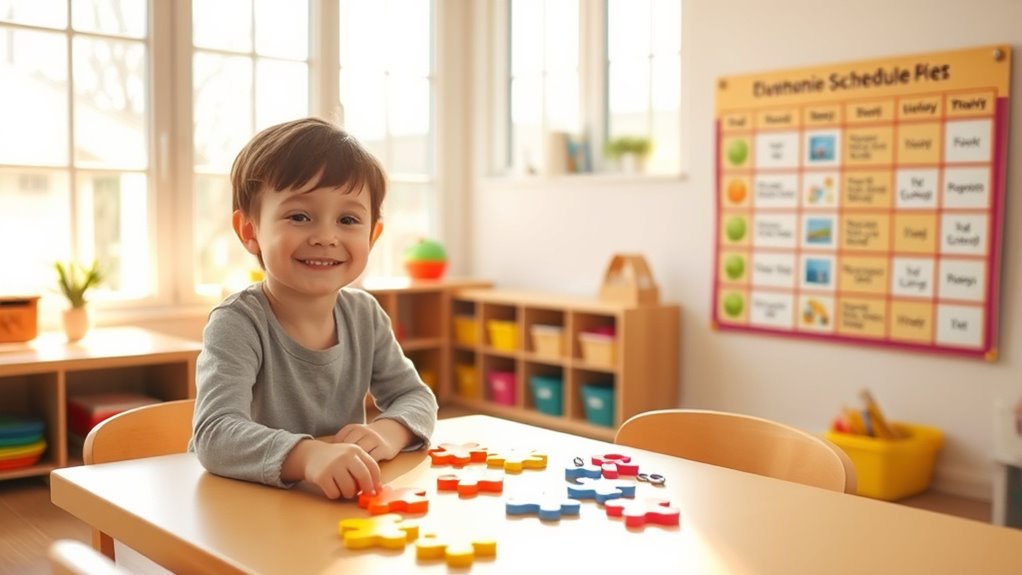

To prevent meltdowns, establish consistent routines and use visual schedules to guide your child through daily activities. Include clear, manageable steps with pictures or icons to help them anticipate shifts and feel secure. Incorporate sensory breaks and calming essential oils like lavender to support relaxation. By creating a predictable environment and addressing sensory needs proactively, you help reduce overwhelm. Keep these strategies in mind, and you’ll find even more ways to support your child’s calmness.
Key Takeaways
- Implement consistent daily routines to foster predictability and reduce anxiety triggers.
- Use visual schedules to prepare children for upcoming activities and transitions.
- Incorporate sensory breaks and calming activities to manage sensory overload proactively.
- Integrate calming essential oils into routines to promote relaxation and emotional balance.
- Maintain patience and regular reinforcement to help children adapt and build self-regulation skills.

Have you ever wondered how establishing routines can help prevent meltdowns? One of the most effective strategies involves using visual schedules. Visual schedules break down daily activities into clear, manageable steps, giving your child a visual roadmap of what to expect. When children know what’s coming next, they feel more secure and in control, reducing anxiety that often leads to meltdowns. These schedules can include pictures, icons, or simple words, depending on your child’s comprehension level. By referencing the schedule regularly, your child learns to anticipate transitions, which helps ease frustration and confusion. Consistency is key; sticking to the same routine each day reinforces a sense of predictability, making it easier for your child to navigate their environment without feeling overwhelmed. Incorporating essential oils for calming into your routine, such as lavender or cedarwood, can also promote relaxation and reduce stress during transitions. In addition to visual schedules, incorporating regular sensory breaks can markedly help prevent meltdowns. Sensory breaks provide a chance for your child to regulate their sensory input, especially when they become overstimulated. These breaks might involve activities like squeezing a stress ball, listening to calming music, or spending time in a quiet, dimly lit space. By giving your child a designated time to reset, you help them manage sensory overload before it escalates into a meltdown. Sensory breaks should be scheduled at regular intervals or whenever you notice signs of distress, such as fidgeting or irritability. This proactive approach encourages self-awareness and self-regulation, empowering your child to recognize their needs and communicate them effectively.
Implementing visual schedules and sensory breaks together creates a structured environment where your child feels supported and understood. When transitions are smoother and sensory needs are addressed proactively, your child is less likely to become overwhelmed. It’s important to communicate these routines clearly and positively, emphasizing that they’re there to help everyone feel more comfortable. Over time, your child will start to associate these routines with a sense of stability, making transitions less intimidating and reducing the likelihood of meltdowns. Remember, patience and consistency are vital. While it might take some time for your child to adapt, reinforcing these routines will foster a calmer, more predictable daily experience. By combining visual schedules with sensory breaks, you’re giving your child tools to navigate their world with confidence, ultimately helping them stay balanced and resilient.
visual schedule for children
As an affiliate, we earn on qualifying purchases.
As an affiliate, we earn on qualifying purchases.
Frequently Asked Questions
How Do Routines Help Children With Autism Specifically?
You can help children with autism by establishing consistent routines, which support sensory integration and reduce unpredictability. Routines create a structured environment, making it easier for them to process sensory input and feel secure. Incorporate communication strategies within these routines, like visual cues or social stories, to enhance understanding and cooperation. This consistency helps prevent meltdowns, boosts confidence, and encourages independence in daily activities.
What Are Signs That Routines Are Causing Stress?
You might notice stress indicators like increased agitation, withdrawal, or frequent tantrums, signaling that routine rigidity is overwhelming your child. They may resist changes or become anxious when routines are disrupted. Pay close attention to these signs, as they show your child is struggling with the current routine. Adjusting routines gradually and offering predictability can help reduce stress indicators and promote a calmer, more flexible environment.
How Flexible Should Routines Be for Different Children?
Think of routines like a favorite song—you can add a few new notes without losing the melody. You should aim for a balance of structure consistency and flexibility, adjusting based on your child’s comfort and needs. Some kids thrive with strict schedules, while others benefit from gentle variations. Pay attention to their cues, and tweak routines to keep them feeling secure yet free to explore, ensuring routines support rather than stress.
Can Routines Be Adapted for Children With Sensory Sensitivities?
Yes, routines can definitely be adapted for children with sensory sensitivities. You should incorporate sensory-friendly modifications into their individualized routines, such as using calming textures, quiet spaces, or visual supports. By tailoring activities to their needs, you help create a predictable environment that minimizes overwhelm. This personalized approach guarantees your child’s routine feels safe and supportive, making it easier to prevent meltdowns and promote their emotional well-being.
What Are Alternative Strategies if Routines Aren’T Effective?
Ironically, when routines don’t cut it, you might think you’re out of options. But try visual schedules and shift warnings—these often work wonders. You can prepare your child for change, reducing surprises. If that still doesn’t help, consider calming techniques like deep breathing or sensory breaks. Remember, every child’s different, so keep experimenting until you find what calms them best. Patience and persistence are your best allies.
calming essential oils for kids
As an affiliate, we earn on qualifying purchases.
As an affiliate, we earn on qualifying purchases.
Conclusion
By establishing gentle routines, you create a comforting rhythm that helps navigate life’s unpredictable moments. These familiar patterns serve as quiet anchors, guiding you through potential storms and easing the weight of sudden surprises. With consistent routines, you gently nurture resilience and calm, turning potential upheavals into opportunities for calm understanding. Remember, it’s in these subtle, steady steps that you find the quiet strength to keep everything moving smoothly, even when the tides feel a little rough.
sensory break toys for children
As an affiliate, we earn on qualifying purchases.
As an affiliate, we earn on qualifying purchases.
child relaxation and stress relief products
As an affiliate, we earn on qualifying purchases.
As an affiliate, we earn on qualifying purchases.