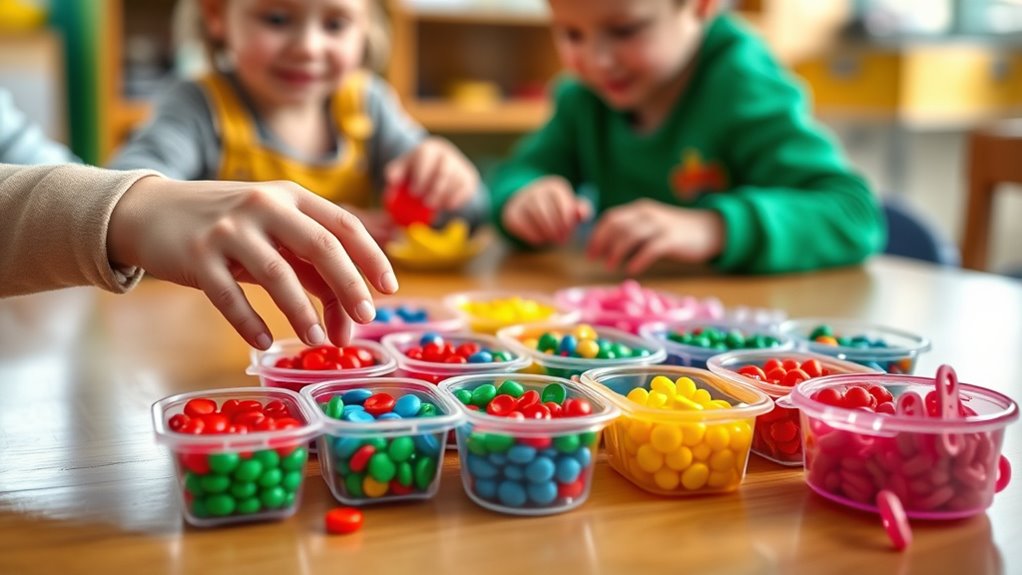

Color sorting games are fun activities that help you develop your child’s cognitive and fine motor skills. By encouraging your child to identify, categorize, and handle objects based on color, you promote decision-making, attention to detail, and visual perception. These games can include colorful blocks, pom-poms, or buttons, and can be made more challenging with added categories or themes. Keep exploring, and you’ll find ways to make these activities even more engaging and educational.
Key Takeaways
- Color sorting games enhance cognitive skills by reinforcing color recognition and categorization abilities.
- They develop fine motor skills through precise handling and placement of objects during sorting activities.
- These games promote independent learning and decision-making by setting up accessible, self-directed tasks.
- Incorporating themed or multi-attribute sorting (size, pattern) increases complexity and problem-solving skills.
- Visual perception improvements are achieved as children discriminate and classify objects based on color and other attributes.

Color sorting games are a fun and engaging way to develop your child’s cognitive and fine motor skills. These activities challenge your little one to recognize colors, categorize objects, and make decisions—all of which contribute to beneficial cognitive development. As they sort items by color, they learn to distinguish between different hues, enhancing their visual perception and attention to detail. This process also encourages memory skills, as they recall what they’ve learned about colors and apply that knowledge when sorting new items.
Engaging motor skills play an essential role in color sorting games. When your child picks up objects, moves them from one container to another, or lines them up, they’re practicing precise hand-eye coordination. These movements strengthen the small muscles in their fingers and hands, which are vital for tasks like writing, drawing, and tying shoelaces. The repetitive nature of sorting helps improve their dexterity and control, making fine motor tasks easier as they grow.
You can make color sorting activities more effective and enjoyable by using a variety of materials. For instance, colorful blocks, pom-poms, buttons, or even pieces of paper work well. Present these items in a mixed pile and encourage your child to sort them into groups based on color. This not only reinforces their understanding of different colors but also promotes concentration and patience as they focus on completing the task. To add a fun twist, you can introduce themed games—like sorting fruits or animals by color—which makes the activity feel more like play than learning.
Another way to boost cognitive and motor skill development is by setting up a sorting station that your child can access independently. This encourages them to make decisions and develop a sense of independence. As they become more confident, you can increase the complexity by adding additional categories or incorporating patterns and sizes alongside colors. These challenges stimulate their problem-solving abilities and help them develop a more nuanced understanding of classification skills. Understanding visual perception is crucial for accurately distinguishing and categorizing objects based on color and other attributes.
Frequently Asked Questions
What Are the Best Age Groups for Color Sorting Games?
You should introduce color sorting games to children around ages 2 to 4, as these are ideal for supporting age-appropriate activities that enhance fine motor skills and cognitive development. These games help kids reach key developmental milestones, such as improving hand-eye coordination and recognizing colors. By engaging in color sorting, children develop problem-solving skills while having fun, making it a perfect activity for early childhood learning and growth.
How Can Parents Encourage Better Color Recognition Skills?
Want to boost your child’s color recognition and fine motor skills? You can encourage this by providing engaging activities like sorting colorful objects or playing matching games. Ask yourself, how can I make learning fun? Use everyday items, turn tasks into challenges, and praise their efforts. This hands-on approach helps your child recognize colors more quickly while strengthening their fine motor skills, making learning both effective and enjoyable.
Are Digital Color Sorting Games Effective for Learning?
Digital color sorting games are effective for learning because they provide engaging digital game benefits like instant feedback and interactive challenges. You can help your child improve their color matching techniques by encouraging them to experiment with different levels and puzzles. These games make learning fun and reinforce color recognition skills through repetition and visual cues, making them a valuable supplement to traditional methods.
What Materials Are Safest for Young Children During Play?
You should choose materials like non-toxic paints and washable markers for young children’s play. These are safe because they’re designed specifically for kids, reducing the risk of poisoning or skin irritation. Always supervise playtime, guarantee materials are labeled safe for children, and keep cleaning supplies handy. Using these safe options helps children explore creatively while giving you peace of mind about their safety during play.
How Do Color Sorting Games Support Cognitive Development?
Color sorting games boost your child’s cognitive development by enhancing visual perception and fine motor skills. Some might think these games are just fun, but they actually teach kids to recognize colors, categorize objects, and improve hand-eye coordination. As your child sorts, they develop critical thinking and problem-solving abilities, laying a strong foundation for future learning. These activities engage young minds while fostering essential skills in a playful way.
Conclusion
Color sorting games boost your cognitive skills and improve your problem-solving abilities. Did you know that studies show children who play these games regularly can enhance their color recognition by up to 30%? So, next time you pick up a color sorting game, remember you’re not just having fun—you’re also sharpening your mind. Keep playing, and you’ll see your skills grow faster than you might expect!