
During illness and recovery, focus on nourishing your body with immune-boosting foods like citrus, leafy greens, lean proteins, and probiotics. Stay well-hydrated with water, herbal teas, and broths to prevent dehydration and help thin mucus. If you feel nauseous or have a reduced appetite, opt for small, easy-to-digest meals like smoothies or soups. Prioritize whole foods over processed sweets, and continue to hydrate deeply—if you want to learn more about optimizing your nutrition, keep going.
Key Takeaways
- Prioritize nutrient-dense, immune-boosting foods like citrus, leafy greens, lean proteins, and probiotics.
- Stay well-hydrated with water, herbal teas, broths, and electrolyte drinks to support recovery.
- Consume small, frequent, easy-to-digest meals such as smoothies, soups, and yogurt to manage nausea and appetite loss.
- Avoid processed and sugary foods, focusing on whole, unprocessed foods to reduce inflammation and strengthen immunity.
- Ensure proper rest, hydration, and balanced nutrition to accelerate healing and restore energy levels.

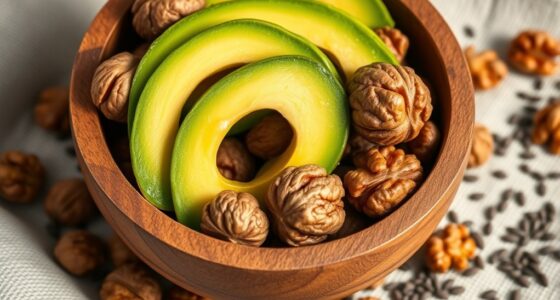
When you’re unwell, proper nutrition becomes essential to support your body’s healing process. Your body needs extra fuel to fight off illness, repair tissues, and restore strength. Focusing on immune-boosting foods can make a significant difference in recovery time. Incorporate nutrient-dense options like citrus fruits, leafy greens, lean proteins, and probiotics to help your immune system function at its best. Vitamin C-rich foods, such as oranges and bell peppers, are known for their role in strengthening immunity, while zinc from nuts, seeds, and whole grains supports immune cell activity. These foods provide the necessary vitamins and minerals your body needs to combat infection effectively.
Support your recovery with nutrient-rich, immune-boosting foods like citrus, greens, lean proteins, and zinc-rich nuts and grains.
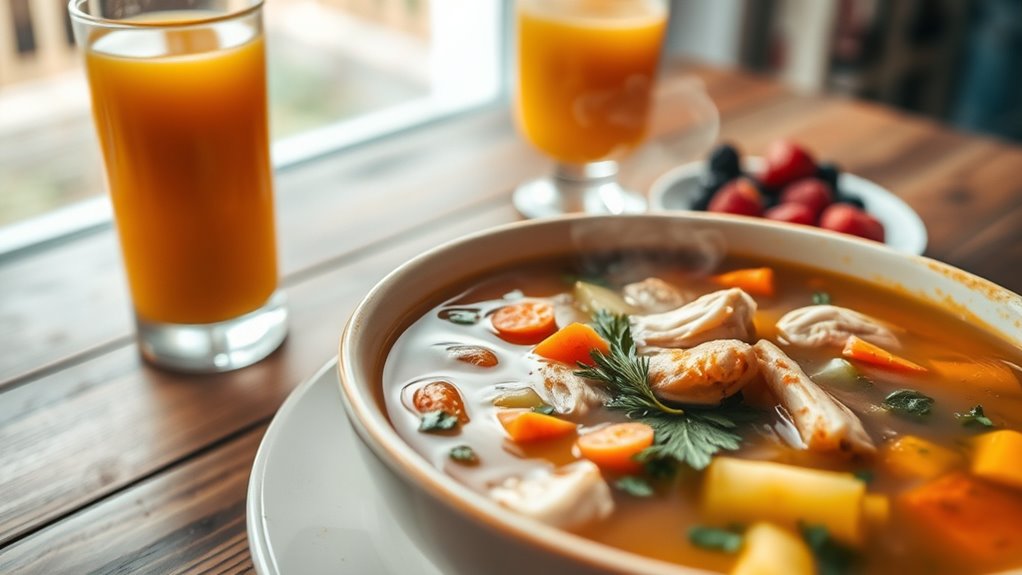
Hydration strategies are equally important during illness. When you’re sick, dehydration can worsen symptoms like fatigue, headache, and congestion. Drinking plenty of fluids helps thin mucus, soothe sore throats, and prevent electrolyte imbalances. Water is always your best choice, but you can also include herbal teas, broths, and electrolyte drinks to diversify your intake. Sipping fluids frequently throughout the day ensures you stay hydrated without overwhelming your stomach. If you’re experiencing a fever or sweating excessively, your fluid needs increase, so aim for more frequent hydration to replenish lost fluids.
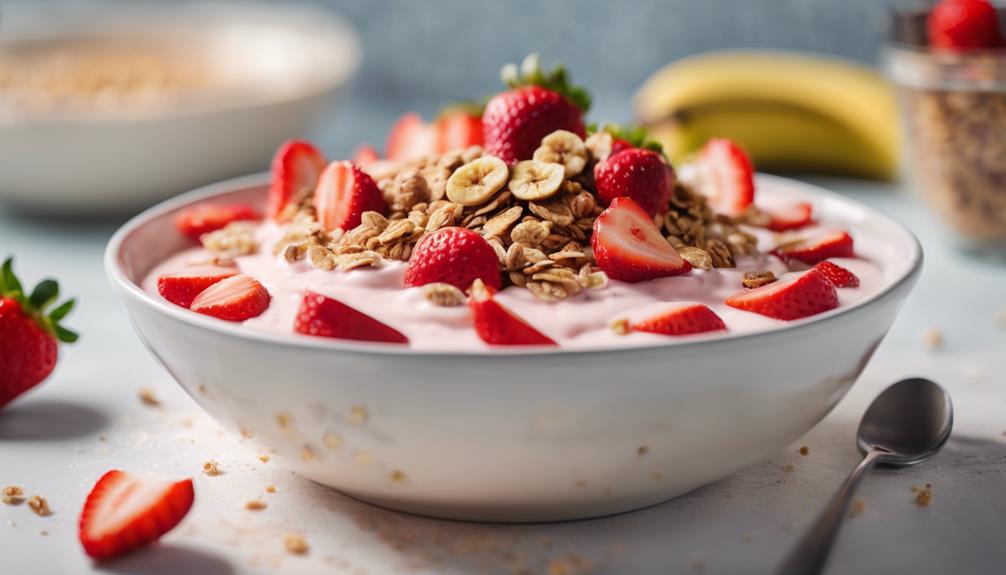
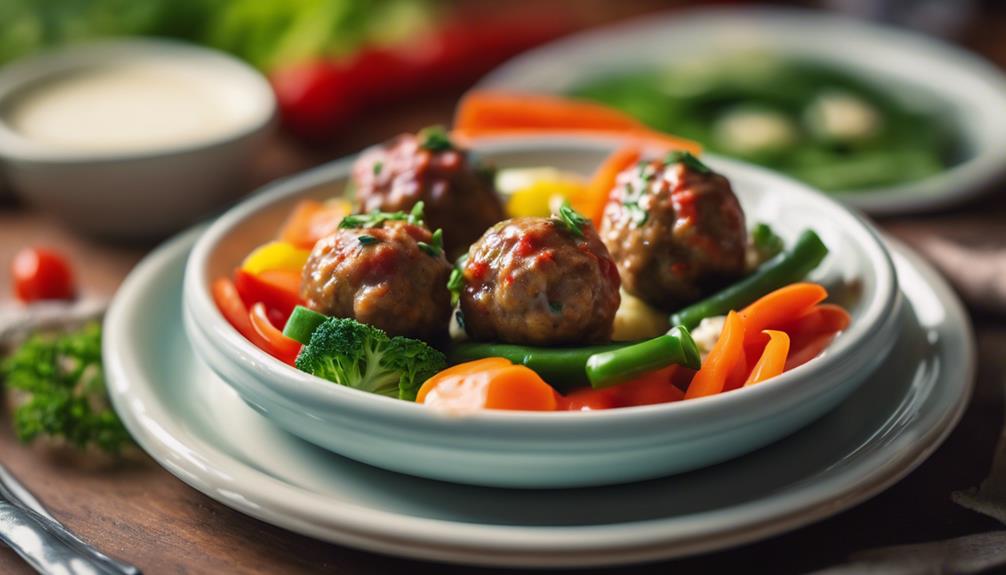
It’s important to listen to your body’s signals. If you feel nausea or have a reduced appetite, opt for small, frequent meals that are easy to digest, such as smoothies, soups, or yogurt. These options can deliver essential nutrients without causing discomfort. Incorporate foods rich in antioxidants, like berries and colorful vegetables, to combat oxidative stress caused by illness. Protein intake is key for tissue repair and immune function, so include eggs, lean poultry, or plant-based proteins in your meals. Additionally, maintaining a healthy immune system through balanced nutrition can help you recover more efficiently.
Avoid processed, sugary foods during this time, as they can suppress immune function and cause inflammation. Instead, prioritize whole foods that support your body’s natural defenses. Rest is just as important as nutrition; your body needs energy to heal, and nourishing it properly can help you recover faster. Remember, your body’s immune response is heightened during illness, so providing it with the right nutrients and hydration can make a real difference in how quickly you bounce back. By focusing on immune-boosting foods and maintaining effective hydration strategies, you’ll give your body the best chance to heal and regain strength efficiently.
immune boosting vitamin C supplements
As an affiliate, we earn on qualifying purchases.
As an affiliate, we earn on qualifying purchases.
Frequently Asked Questions
Can I Still Take Supplements While Sick?
Yes, you can take supplements while sick, but consider the timing to support your immune system most effectively. Focus on immune support supplements like vitamin C, zinc, or echinacea, and take them consistently for maximum benefits. Avoid taking multiple supplements at once to prevent interactions. Always follow dosage instructions, and if you’re unsure, consult a healthcare professional to ensure supplements won’t interfere with your illness or medications.
How Does Hydration Affect Recovery?
Hydration plays a vital role in your recovery by maintaining electrolyte balance and supporting your immune system. Proper hydration timing guarantees you replace lost fluids and minerals efficiently, helping your body heal faster. When you’re sick, drinking water, electrolyte drinks, or broths at regular intervals keeps you hydrated, prevents dehydration, and promotes ideal recovery. Stay attentive to your body’s signals and sip fluids consistently to support your healing process effectively.
Are There Foods to Avoid During Illness?
You should avoid foods to avoid that can worsen your symptoms or slow recovery, like spicy, greasy, or highly processed foods. Food restrictions often include dairy if you’re sensitive, caffeine, and alcohol, as they can dehydrate you or irritate your stomach. Stick to gentle, nutritious options, and listen to your body’s signals to help your body recover faster. Consulting a healthcare professional can provide personalized guidance.
Should I Increase or Decrease My Calorie Intake?
During illness, your energy needs can increase by up to 50%, so you should adjust your calorie intake accordingly. You don’t always need to decrease calories; instead, listen to your body’s signals. If you’re active or recovering, increasing calories ensures your body has enough fuel to heal and regain strength. Focus on nutrient-dense foods to meet your heightened energy needs, helping you recover faster and stay energized.
How Long Should I Follow Special Nutrition Plans Post-Illness?
You should follow a post illness diet and recovery nutrition duration based on your specific needs, which may vary. Generally, continue tailored nutrition plans until your energy levels, appetite, and strength return to normal, usually spanning a few days to a few weeks. Listen to your body and consult your healthcare provider for personalized guidance. This guarantees you regain strength safely and support full recovery.
electrolyte hydration drinks
As an affiliate, we earn on qualifying purchases.
As an affiliate, we earn on qualifying purchases.
Conclusion
Sticking to good nutrition during illness and recovery can truly be your secret weapon—it’s more powerful than a superhero’s cape! By fueling your body with the right foods, you’ll give yourself the best chance to bounce back faster and stronger. Remember, what you eat now can make all the difference between lingering illness and a swift, triumphant recovery. So, stay committed to nourishing yourself—you’re capable of conquering any health challenge that comes your way!
easy-to-digest smoothies for nausea
As an affiliate, we earn on qualifying purchases.
As an affiliate, we earn on qualifying purchases.
probiotic yogurt for recovery
As an affiliate, we earn on qualifying purchases.
As an affiliate, we earn on qualifying purchases.