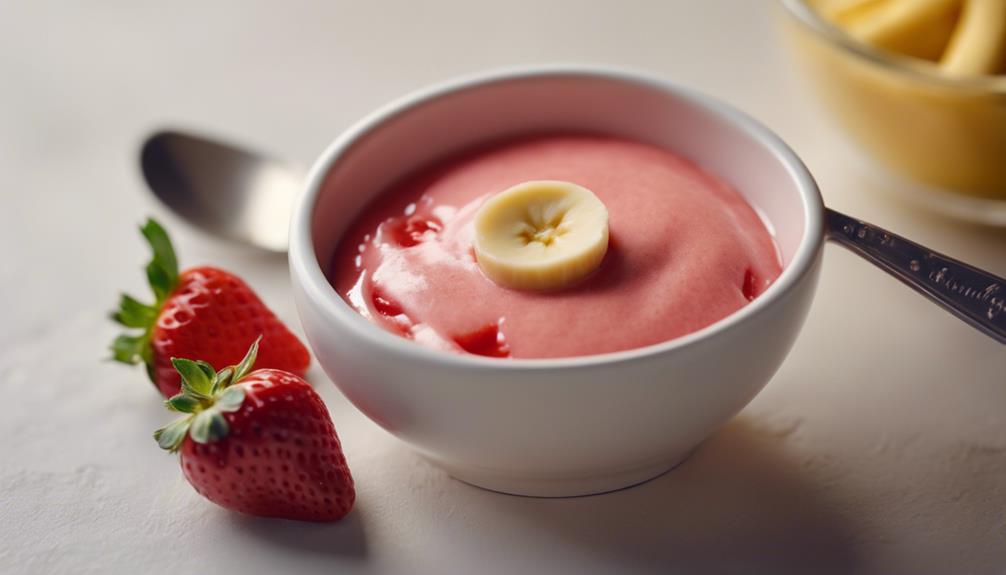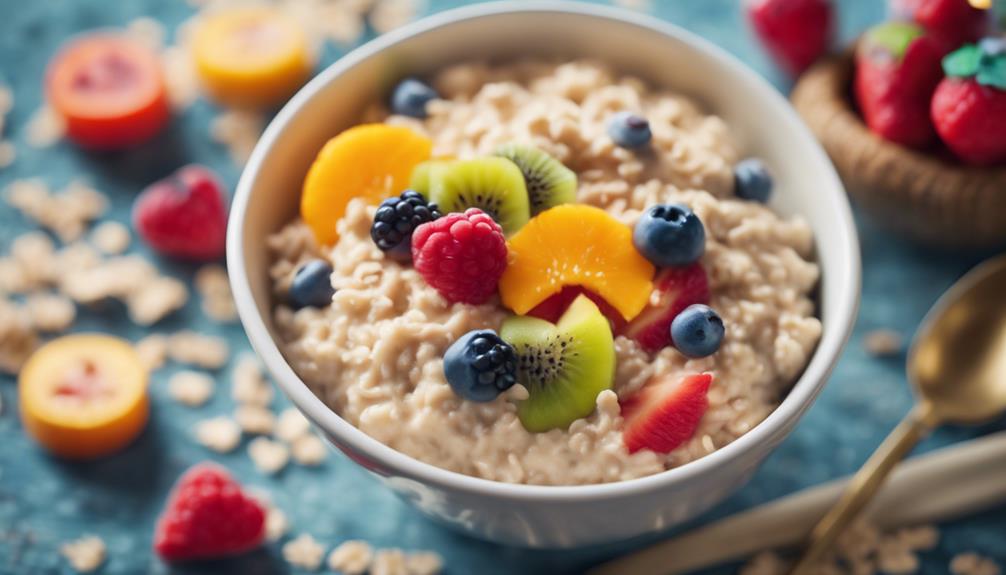

For young children, the recommended daily sodium limits are up to 1,200 mg for ages 1-3 and 1,500 mg for ages 4-8 to support healthy growth and prevent high blood pressure. It’s important to watch for hidden sources of sodium in processed foods and favor fresh, whole foods. Use flavorings like herbs and lemon to reduce salt in meals. Keep exploring how you can balance flavor and health to set your child up for a healthier future.
Key Takeaways
- Children aged 1-3 should consume no more than 1,200 mg of sodium daily.
- Children aged 4-8 should limit sodium intake to 1,500 mg per day.
- Excessive salt can lead to high blood pressure and future cardiovascular issues.
- Use herbs, spices, and citrus to flavor foods instead of salt.
- Minimize processed foods and read labels to control hidden sodium in children’s diets.
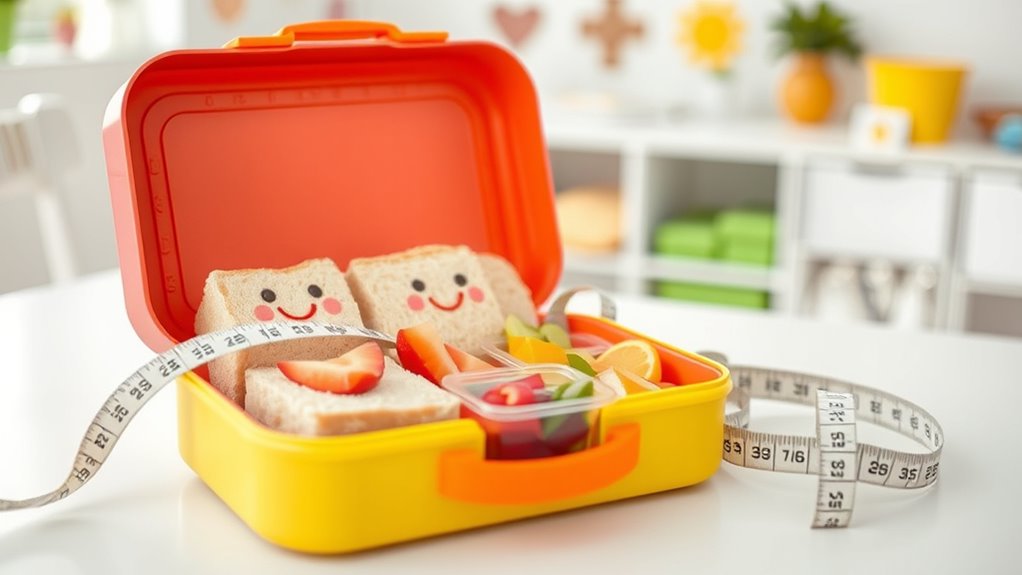
Have you ever wondered how much salt is safe for young children? Understanding sodium intake guidelines is essential because young kids are more vulnerable to the effects of excessive salt. The general consensus is that children aged 1 to 3 should consume no more than 1,200 milligrams of sodium daily, while those aged 4 to 8 should stay under 1,500 milligrams. These guidelines help prevent issues like high blood pressure and future cardiovascular problems. But it’s not just about limiting salt; it’s also about how you can make food appealing without relying on added sodium. This is where flavor enhancement techniques come into play. Instead of reaching for the salt shaker, you can use herbs, spices, citrus, or vinegar to boost the flavor of meals naturally. These methods make food tasty and satisfying while keeping sodium levels in check.
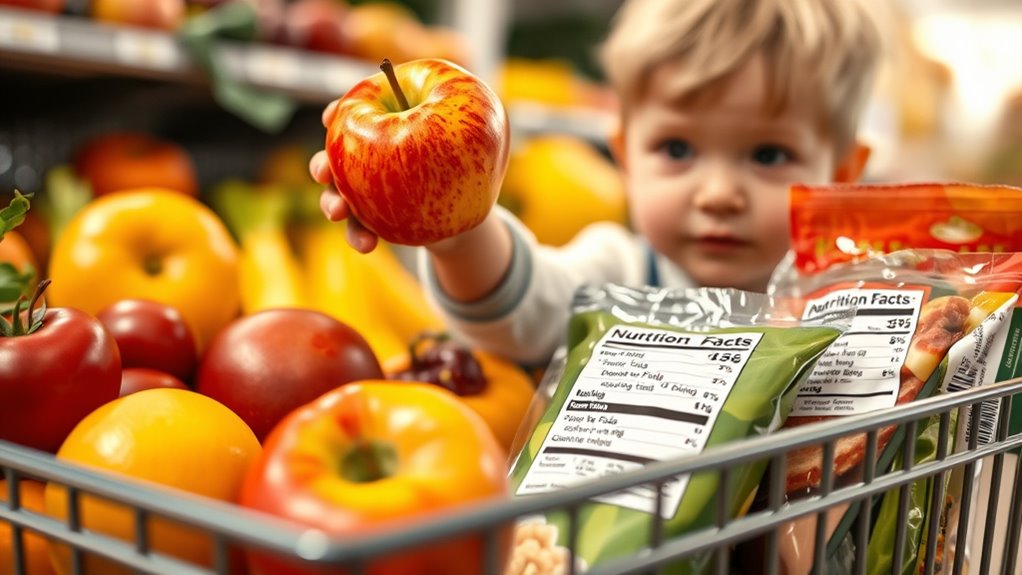
When preparing meals for young children, it’s essential to be mindful of hidden sodium in processed and packaged foods. Many kid-friendly snacks and convenience foods contain more salt than you might realize, so reading labels becomes a key step. Opt for fresh fruits, vegetables, whole grains, and lean proteins, which naturally contain lower sodium content. Cooking at home allows you to control how much salt goes into each dish, giving you a better handle on your child’s sodium intake. If you do need to add salt for flavor, do so sparingly, and try to incorporate other flavor-enhancing techniques instead. For example, adding fresh garlic, onion, or herbs like basil and oregano can bring depth to dishes without adding sodium. A splash of lemon juice or a dash of vinegar can also brighten flavors and make meals more appealing to young taste buds.
Additionally, understanding labeled sodium content in packaged foods empowers you to make healthier choices for your child’s diet. Encouraging your child to develop a palate for less salty foods early on can set the stage for healthier eating habits in the future. Gradually reducing salt in meals helps their taste buds adjust over time, making it easier for them to enjoy natural flavors. Remember, a little creativity in flavoring can go a long way. Instead of relying on salt to make food appealing, explore different seasoning techniques that enhance taste without increasing sodium. By combining awareness of sodium intake guidelines with effective flavor enhancement techniques, you can help your child develop a balanced, healthy diet that supports their growth and overall well-being.

Pirate's Booty Aged White Cheddar and Cheddar Blast Cheese Puffs Variety Pack, Gluten-Free, Kids Snacks, 0.5oz and 0.75oz (18ct)
Pirate's Booty Aged White Cheddar and Cheddar Blast Cheese Puffs Variety Pack contains 18 snack size bags. The…
As an affiliate, we earn on qualifying purchases.
As an affiliate, we earn on qualifying purchases.
Frequently Asked Questions
How Can I Identify High-Sodium Foods for My Child?
To identify high-sodium foods for your child, start by reading nutrition labels carefully. Look for the sodium content per serving—aim for lower numbers. Recognize processed foods like chips, canned soups, and lunch meats, which often contain hidden salt. Choosing fresh, whole foods and cooking at home helps you regulate sodium intake. Being vigilant with labels and recognizing processed options ensures you can keep your child’s sodium levels within healthy limits.
Are There Natural Alternatives to Salt for Flavoring Children’s Meals?
If you’re worried about flavoring your child’s meals without salt, don’t fret—herbal seasonings and natural flavor enhancers are great options. You can use herbs like basil, oregano, and thyme, which add vibrant taste without excess sodium. Also, try garlic, lemon juice, or vinegar to boost flavor naturally. These alternatives make meals appealing while helping you keep sodium levels in check, supporting your child’s health.
How Does Sodium Intake Affect Long-Term Health in Children?
High sodium intake can negatively impact your child’s long-term health by increasing the risk of heart health issues and impairing kidney function. Excess sodium strains the heart, raising blood pressure and potentially leading to cardiovascular problems later in life. It also puts stress on the kidneys, which can diminish their ability to filter properly. Reducing sodium now helps protect your child’s future health and promotes overall well-being.
What Are the Signs of Sodium Deficiency in Young Children?
Imagine your child suddenly becomes irritable, with nausea and confusion—these could be signs of sodium deficiency. You might notice electrolyte imbalance symptoms like hyponatremia, which occurs when sodium levels drop too low. In young children, symptoms include headache, seizures, or fatigue. If you suspect this, seek medical attention promptly, as hyponatremia symptoms require quick intervention to prevent serious complications.
Can Low-Sodium Diets Impact a Child’s Growth and Development?
A low-sodium diet can impact your child’s growth and development by causing growth restrictions and developmental delays. When sodium intake is too limited, it may interfere with essential bodily functions, including nerve and muscle activity, affecting overall health. You should monitor their diet carefully, ensuring they get enough sodium to support proper growth and development without exceeding recommended limits. Always consult a healthcare provider for personalized guidance.

Bragg Organic Sprinkle Seasoning with 24 Herbs and Spices – 1.5 oz – Salt-Free Seasoning Blend – Perfect for Vegetables, Meats, and Salads
BRAGG SPRINKLE SEASONING: Complex, clean, and super versatile, our Sprinkle blend combines 24 herbs and spices to create…
As an affiliate, we earn on qualifying purchases.
As an affiliate, we earn on qualifying purchases.
Conclusion
You can see that keeping sodium intake low in young children isn’t just a theory—it’s backed by research showing long-term health benefits. Imagine their tiny bodies, growing stronger and healthier with each balanced meal. By limiting sodium, you help prevent future issues like high blood pressure and heart disease. Think of it as planting a seed now so they can enjoy a healthier, brighter future. Your choices today shape their well-being for years to come.

TRUE LEMON KIDS Wild Watermelon (10 Packets) – Hydration for Kids – No Preservatives, No Artificial Flavors & Sweeteners – Low Sugar Water Flavoring – Juice Powdered Drink Mix
MADE FROM SIMPLE INGREDIENTS: True Lemon Kids Wild Watermelon is made from simple, Non-GMO ingredients sweetened with stevia…
As an affiliate, we earn on qualifying purchases.
As an affiliate, we earn on qualifying purchases.

Kigibo Food Stickers for Kids, 110pcs Fruit Vegetable Realistic Stickers Teachers Student Decals for Classroom Theme Activities(Fruits Vegetables)
【Sticker Pack】: 110pcs food stickers for kids, realistic stickers for fruits and vegetables, with bright colors and a…
As an affiliate, we earn on qualifying purchases.
As an affiliate, we earn on qualifying purchases.