
To diaper your baby, start by gathering all your supplies and placing your baby on a safe, flat surface. Remove the dirty diaper gently, clean your baby thoroughly with fragrance-free wipes from front to back, and apply diaper rash cream if needed. Choose a diaper that fits snugly without being tight, and that offers good absorbency. Change the diaper every two to three hours or after a bowel movement. Follow these steps closely, and you’ll soon master the basics of effective diapering.

Turn the school run and nap time into listening time
- Thousands of audiobooks, podcasts and originals
- Listen on your phone, tablet or Echo — also offline
- Cancel anytime
Key Takeaways
- Gather all diapering supplies and choose a properly fitting, sensitive-skin-friendly diaper before starting.
- Place the baby on a safe, flat surface and undo the dirty diaper carefully.
- Clean the baby’s skin thoroughly from front to back using gentle, alcohol-free wipes.
- Apply diaper rash cream if needed, then secure a clean, well-fitting diaper.
- Dispose of the soiled diaper properly and consider diaper-free time to promote skin health.
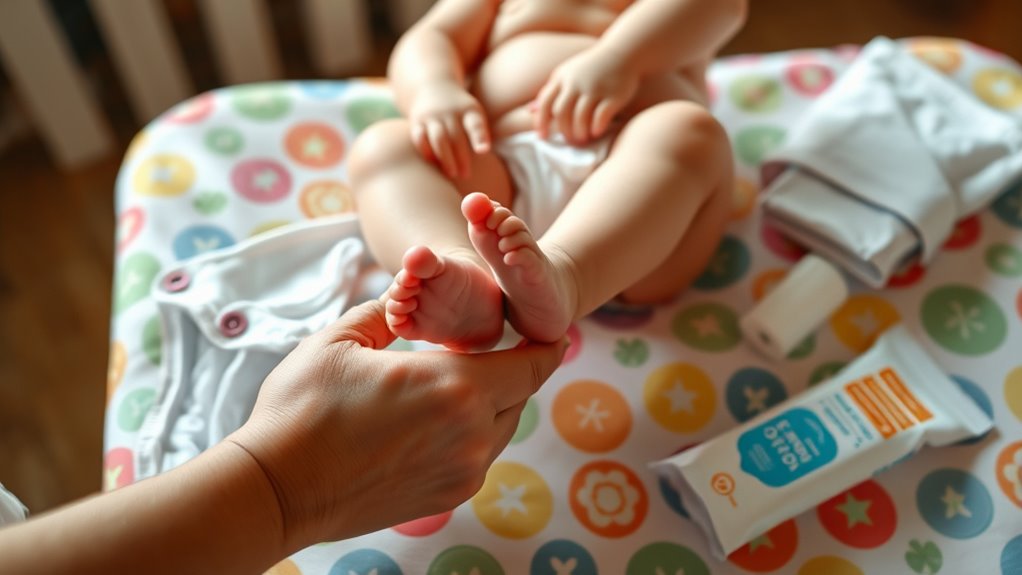
Are you new to diapering and wondering where to start? The first step is understanding how to choose the right diaper for your baby. Picking the right diaper can make a big difference in diaper rash prevention, keeping your little one comfortable and healthy. Look for diapers that fit snugly without being too tight; a well-fitting diaper prevents leaks and reduces chafing. Consider your baby’s size and weight, and don’t hesitate to try different brands until you find one that works best. Some diapers are specially designed for sensitive skin, with fewer chemicals and fragrances, which can help prevent irritation and rash. Also, think about the absorbency level you need—more absorbent diapers keep moisture away from your baby’s skin longer, lowering the risk of diaper rash.
Once you have the right diaper, establishing a routine is key. When changing your baby, start by gathering all necessary supplies—wipes, cream, and a clean diaper—so you’re ready to act swiftly. Lay your baby on a safe, flat surface, and undo the dirty diaper. Be gentle but thorough when cleaning, using wipes that are alcohol-free and fragrance-free to avoid irritating sensitive skin. Make sure to wipe from front to back, especially for girls, to prevent the spread of bacteria. During diaper changes, check your baby’s skin for signs of redness or irritation, and if you notice any, apply a diaper rash cream to create a barrier and promote healing.
As you change diapers, keep a close eye on your baby’s skin condition. Frequent diaper changes, ideally every two to three hours or immediately after a bowel movement, help prevent prolonged exposure to moisture and irritants that can cause diaper rash. When disposing of dirty diapers, do so promptly and securely to contain odors and bacteria. For added diaper rash prevention, consider leaving your baby’s diaper off for short periods when possible—supervised and on a safe surface—allowing the skin to breathe. Using breathable diaper covers or cloth diapers can also help air circulate around the skin, reducing moisture buildup.
fragrance-free baby wipes for sensitive skin
As an affiliate, we earn on qualifying purchases.
As an affiliate, we earn on qualifying purchases.
Frequently Asked Questions
How Often Should I Change My Baby’s Diaper?
You should change your baby’s diaper every 2 to 3 hours or whenever it’s soiled. Keep an eye out for signs like redness or a foul smell. When changing, follow diaper disposal tips like sealing it tightly and disposing of it properly. Choosing the right diaper with good absorbency helps prevent leaks and rash. Regular changes keep your baby comfortable, healthy, and happy, reducing skin irritation.
What Are Signs of Diaper Rash?
You notice redness, inflammation, or tender patches—these are signs of diaper rash. Think of it as a warning flag, signaling irritation from diaper rash causes like moisture, friction, or sensitivity. You might see peeling skin or small bumps. For remedies, keep the area clean and dry, apply barrier creams, and change diapers frequently. If the rash persists, consult your pediatrician; early action helps soothe your baby’s discomfort quickly.
How Do I Dispose of a Soiled Diaper Properly?
You should first fold the soiled diaper inward to contain the mess, then secure it with the tabs. Dispose of it in a trash bin, ideally one with a lid, and consider biodegradable options or diaper disposal methods that minimize environmental impact. Avoid flushing disposable diapers down the toilet to prevent clogs. Regularly empty the trash to prevent odor, and choose eco-friendly disposal options whenever possible to reduce your carbon footprint.
Can I Reuse Cloth Diapers Overnight?
Absolutely, you can reuse cloth diapers overnight if you follow proper cloth diaper laundry routines. Make sure to wash your reusable diaper covers and inserts thoroughly with gentle detergent to remove all residues. Using high-quality, breathable covers helps prevent leaks and keeps your baby comfortable. Just verify the diapers are completely dry before reuse, and consider adding an extra insert for extra absorbency. This eco-friendly approach keeps your little one cozy all night long.
What Should I Do if My Baby Has a Diaper Allergy?
If your baby shows diaper allergy symptoms like redness, rash, or swelling, stop using their current diapers right away. Switch to hypoallergenic diaper options made from gentle, natural materials. You might also want to consult your pediatrician for advice, and consider applying a barrier cream to protect your baby’s skin. Monitoring their reaction helps you find the best, irritation-free fit, ensuring comfort and healthier skin.
Conclusion
Just like the steady hand of a master painter, your diapering routine becomes a comforting ritual that builds trust and security. Remember, every change is a small step in guiding your little one through life’s early lessons. With patience and love, you’ll turn these moments into cherished memories—much like a quiet sunrise after a long night. Embrace the journey, knowing that each diaper change shapes your child’s world and your bond together.
Fall Picks
fall essentials
As an affiliate, we earn on qualifying purchases.